
If you’ve been struggling with perimenopause and eating disorders — or a relationship with food that feels suddenly destabilized after years of hard-won peace — this post is for you.
Not the clinical version of you. The real one. The one who thought she’d done enough work to be past this, and is now standing in her kitchen at 10pm wondering how she got here again.
We work with women navigating exactly this intersection — the hormonal, emotional, and relational upheaval of midlife, and what it does to the body they thought they’d finally made peace with. What we’ve learned, over years of sitting with these women, is that what’s happening isn’t a failure of recovery. It’s a collision of biology, identity, and circumstance that deserves to be understood on its own terms.
If you read nothing else in this post, read this: it’s not what you think. And understanding what it actually is changes everything.

The Hormonal Upheaval of Perimenopause — And Why It Hits Your Relationship With Food
Perimenopause is not simply a hormonal inconvenience on the way to menopause. For many women, it is a full-scale reorganization of the internal landscape — mood, sleep, appetite, body perception, and the capacity to regulate emotion all shifting simultaneously, often without warning.
Estrogen and progesterone don’t just govern the reproductive cycle. They are deeply involved in serotonin regulation, stress response, and the brain’s relationship to hunger and reward. When they begin to fluctuate unpredictably — as they do throughout perimenopause — the effects ripple through every system they touch.
For women with no history of disordered eating, this can feel destabilizing. For women who do have that history, it can feel like the floor dropping out.
When Your Body Stops Feeling Like Yours
One of the most disorienting aspects of perimenopause is the experience of inhabiting a body that no longer responds the way it used to. Weight redistributes. Hunger cues shift. The body that felt, however imperfectly, like familiar territory begins to feel foreign.
For women who have spent years — sometimes decades — building a workable relationship with their bodies, this foreignness is not a neutral experience. It activates something old. Something that was managed, not resolved. And the coping strategies that developed around food in earlier years don’t stay dormant when the nervous system is under this kind of pressure.
This is where perimenopause eating disorders most commonly emerge or re-emerge — not because the woman has failed, but because the conditions that originally gave rise to the disordered relationship with food are, in many ways, present again: a body that feels uncontrollable, an emotional system under strain, and a culture that has very specific and very punishing ideas about what a midlife woman’s body should look like.
The Sleep-Stress-Food Loop
Disrupted sleep is one of the most consistent features of perimenopause — and one of the most underappreciated contributors to disordered eating patterns at midlife.
Poor sleep elevates cortisol, the body’s primary stress hormone. Elevated cortisol increases cravings for high-density foods, disrupts hunger signaling, and compromises the prefrontal functioning that supports impulse regulation and emotional tolerance.
In plain language: when you’re not sleeping, your body is working against you in the restrict-binge cycle in ways that have nothing to do with willpower or discipline. The biology is doing what biology does under stress. Understanding that doesn’t make the cycle easier to live inside — but it does change what the cycle means.
How Perimenopause Can Reignite or Intensify the Restrict–Binge Cycle
For women with a history of restriction, the body’s changing hunger cues in perimenopause can feel threatening. The familiar logic of control reasserts itself: if the body is becoming unfamiliar and unpredictable, restriction offers the illusion of agency.
For women who believed they had recovered — who had built real, hard-won peace with food — the re-emergence of these patterns carries an additional weight. It can feel like starting over. Like the work didn’t hold.
It held. This is not starting over. It is a new layer of the same wound, surfacing under new conditions. And it deserves the same quality of attention and care that the original work did — not shame, not silence, and not the sterile advice of someone who has never sat with what this actually feels like from the inside.
The Body Image Earthquake of Midlife
Weight redistribution, bloating, the visceral experience of a body that “doesn’t respond” — these are real, and they land inside a cultural context that has very little compassion for the midlife female body.
Diet culture does not go quiet at perimenopause. If anything, it gets louder. The messaging that a woman should be able to manage her changing body through discipline and restriction is everywhere — and for a woman already prone to the restrict-binge cycle, it is fuel on a fire that didn’t need any help.
Restriction feels logical when the body is changing in ways that feel out of control. It feels like the responsible, health-conscious choice. And it makes the cycle worse. Every time.
Perimenopause Eating Disorders Are Underdiagnosed — Here’s Why
The cultural story about eating disorders is that they are a young woman’s issue. Adolescent. Visible. Dramatic.
The reality is that perimenopause eating disorders are far more common than the clinical literature has historically acknowledged — and they often present differently than they do in younger women. Less visibly. More quietly. Woven into the fabric of a life that looks, from the outside, entirely together.
Women at midlife are less likely to be screened for disordered eating. They’re less likely to identify their own behavior as disordered — I’m just being careful or I’m just trying to be healthy are common framings. And they are less likely to seek treatment, in part because they don’t see themselves in the cultural image of who eating disorders happen to.
This is one of the most important things we can say plainly: perimenopause eating disorders are real, they are common, and they deserve to be taken seriously — not normalized as an inevitable feature of midlife.
The Sandwich Generation Factor — When Your Plate Is Already Full
There is a particular kind of woman who walks through the door in midlife. She is managing her own hormonal upheaval while simultaneously caring for children who still need her and aging parents who need her more. She is the person everyone else calls. She is exhausted in a way that sleep doesn’t fix.
She is what researchers call the Sandwich Generation — women caught between the demands of two dependent generations — and the relational load she is carrying is not incidental to her relationship with food. It is central to it.
When There’s No Room for Your Own Needs
Chronic caretaking depletes the internal resources that emotional regulation requires. When those resources are depleted, the nervous system looks for relief. For women with a history of disordered eating, food is a familiar source of that relief — not because they are weak, but because it worked, once, and the body remembers.
This is not a time management problem. It is a relational one. The woman who eats last — literally and emotionally — is not making a choice so much as enacting a pattern that has been building for decades. Understanding that pattern, and what it is actually asking for, is the beginning of something different.
The “I Should Be Past This” Shame
There is a particular cruelty in midlife disordered eating that deserves to be named directly.
It is the belief that at this age, this stage, this level of self-awareness and therapy and hard work, it shouldn’t still be happening.
That shame is not a sign that something is deeply wrong with you. It is a sign that you care about your own healing, and that you are holding yourself to a standard that doesn’t account for the fact that healing is not linear, bodies are not machines, and perimenopause is a genuinely destabilizing transition even for women who have done everything right.
The shame drives the behavior underground. And underground is where it does the most damage.
What Healing Looks Like at This Stage — And Why It’s Different
The approaches that helped at 25 may not be the right fit now. Not because they were wrong then, but because the woman doing the healing has changed — and the conditions she’s healing inside of have changed with her.
Perimenopause eating disorders require an approach that takes seriously both the physiological dimension of what’s happening and the relational one. The body needs to be understood. And the woman inside the body needs to be witnessed — not managed, not advised, not given a plan.
The Relational Piece Nobody Talks About
Perimenopause is not only a hormonal transition. It is an identity one. The woman who comes out the other side is not the same woman who entered — and that process of becoming is sticky, nonlinear, and best navigated in relationship with others who are doing the same.
This is one of the reasons we believe so deeply in interpersonal process group work for women at this stage. Not because individual therapy isn’t valuable — it is — but because there is something that happens when a woman is genuinely witnessed by other women navigating the same terrain. Something that the one-on-one room, for all its depth, cannot fully replicate.
One of our clients described it simply: “I learned on so many levels that I was not alone.”
That is not a small thing. For a woman who has been holding everything together for everyone else, being in a room where she doesn’t have to — where she can be uncertain and unfinished and still welcome — is often the beginning of real change.
If This Landed
You are not starting over. You are not failing. You are a human woman in a genuinely hard transition, and your relationship with food is telling you something that deserves to be heard — not fixed, not managed, not white-knuckled through.
If you’re looking for a starting place, the Break the Restrict–Binge Cycle guide was written for exactly this moment. It covers the biology underneath the cycle, three tools for quieting the shame response, and how to begin rebuilding trust with your body — without a plan, without rules, without another thing to fail at.
And if you’re ready for a room — a real one, with other women, held by a clinician who understands this intersection — our Larger Bodies Process Group is open.
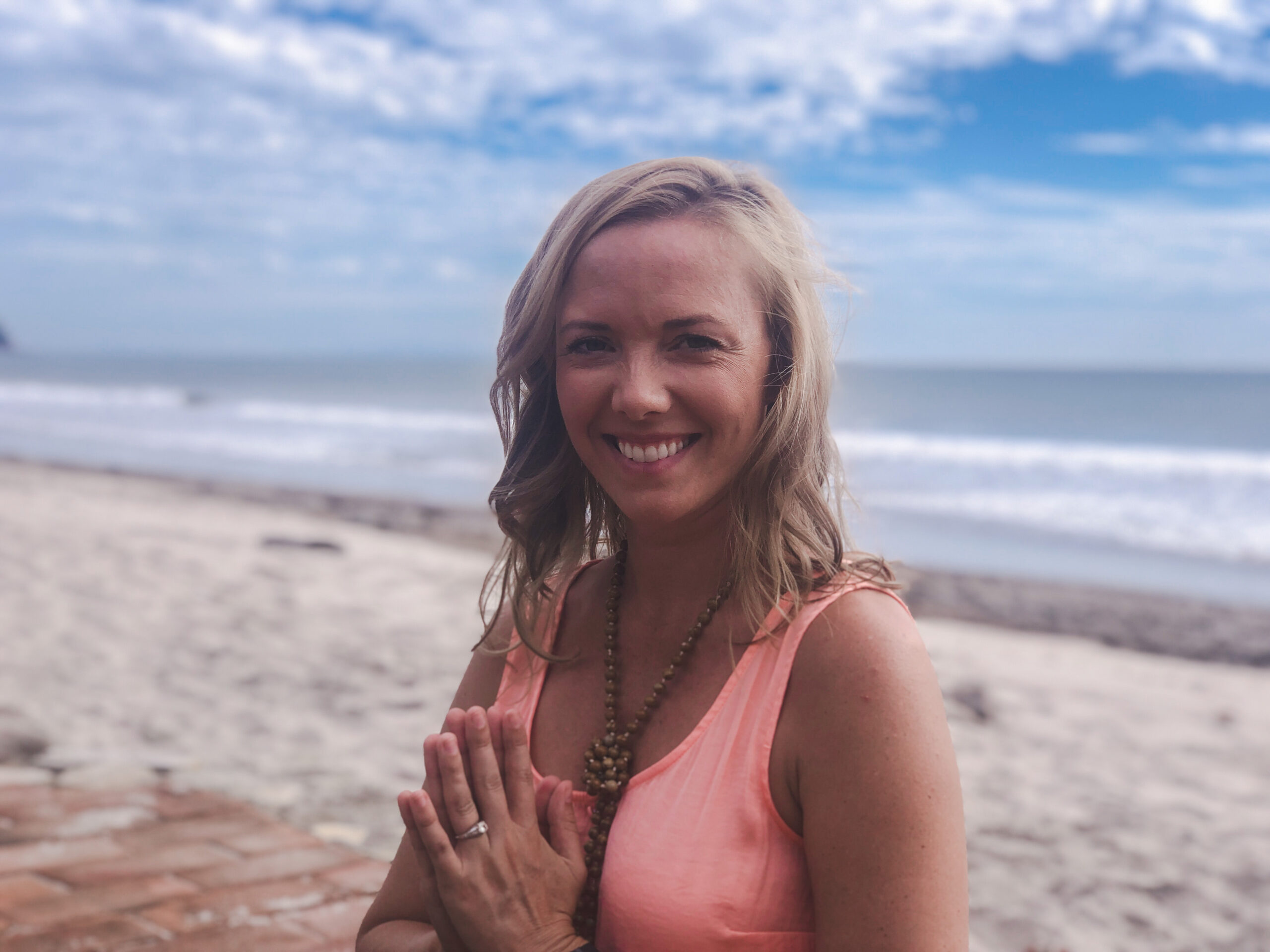
Ashley is the blog writer and social media manager for JLewis Therapy.
Join Our Mailing List
Maybe you don't need counseling right now, but how about getting tips from a professional every now and then?
Latest Posts





Telehealth is Available!
Do not emotionally distance while you are physically distance, J Lewis Therapy is here to help.